FOR ATHLETES
The Athlete Lab
Performance testing and targeted training for soccer athletes ready to develop with intent. Comprehensive measurement combined with training built around what your athlete can actually do - and where they're trying to get to next. Ages 11+, in-person in Fallbrook.
What We Measure
Three dimensions of performance.
Performance is multi-dimensional. Each dimension tells part of the story. Together, they tell all of it. What follows is each one in turn.
01 — Physical
Fitness Capacity
How the body moves. GPS movement tracking, force plate testing, isometric strength assessment.
02 — Technical
Technical Improvement
How the skill executes. Position-specific assessment and game video analysis.
03 — Cognitive
Game Intelligence
How the mind decides. Perception, execution, and confidence under pressure.
01. DIMENSION - FITNESS CAPACITY
Best-in-class tools, working as one system
GPS MOVEMENT TRACKING
Game and Training Load
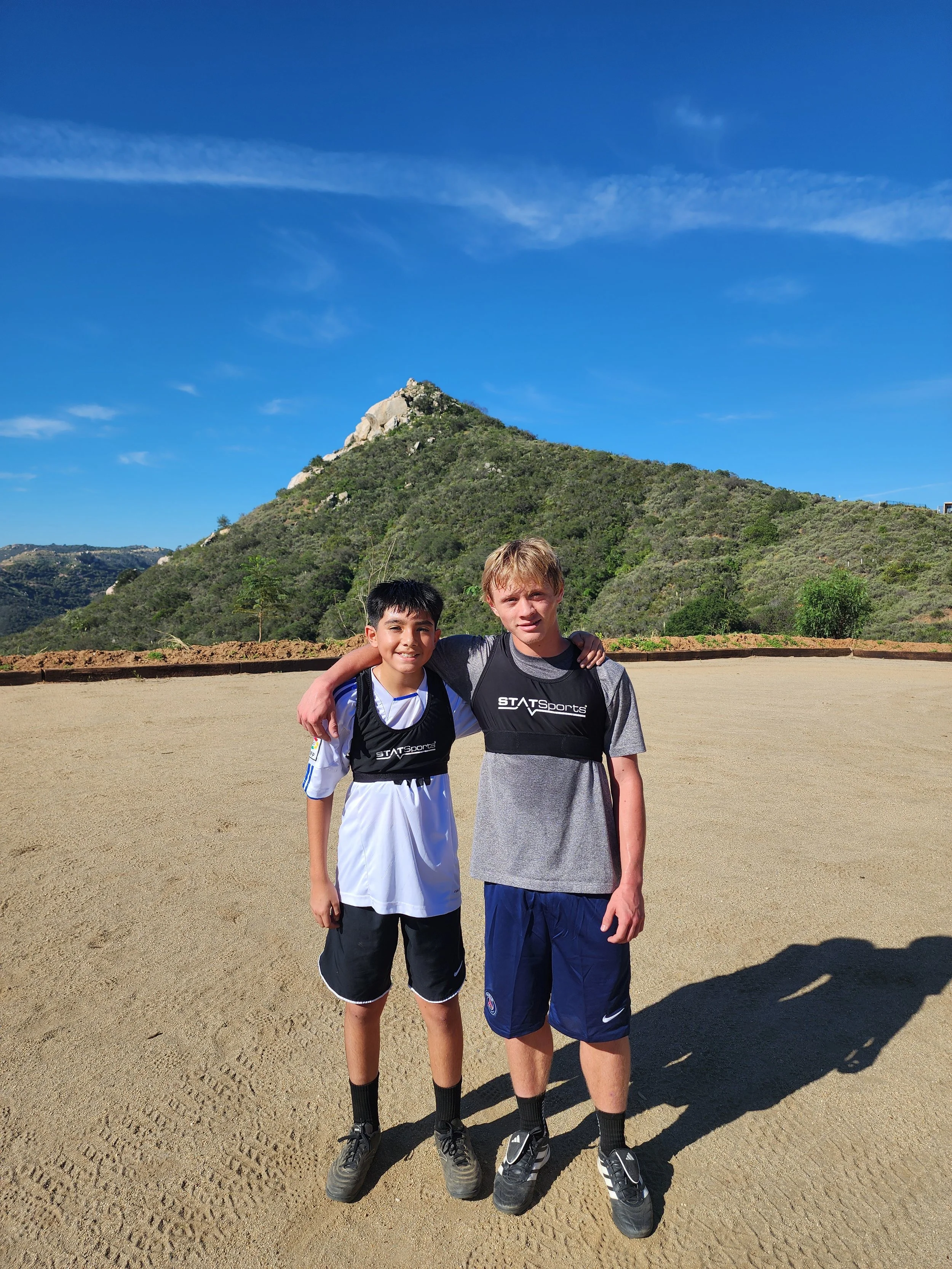
In-training and in-match data capture: distance, sprint count, max speed, accelerations, intensity, and heart rate response. The system is used by Premier League clubs, U.S. Soccer national teams, and top NCAA soccer programs. Continuous tracking across the full season - not just on testing days.
INTELLIGENT-LOAD SYSTEM
Strength Testing, Training, and Return-to-Performance
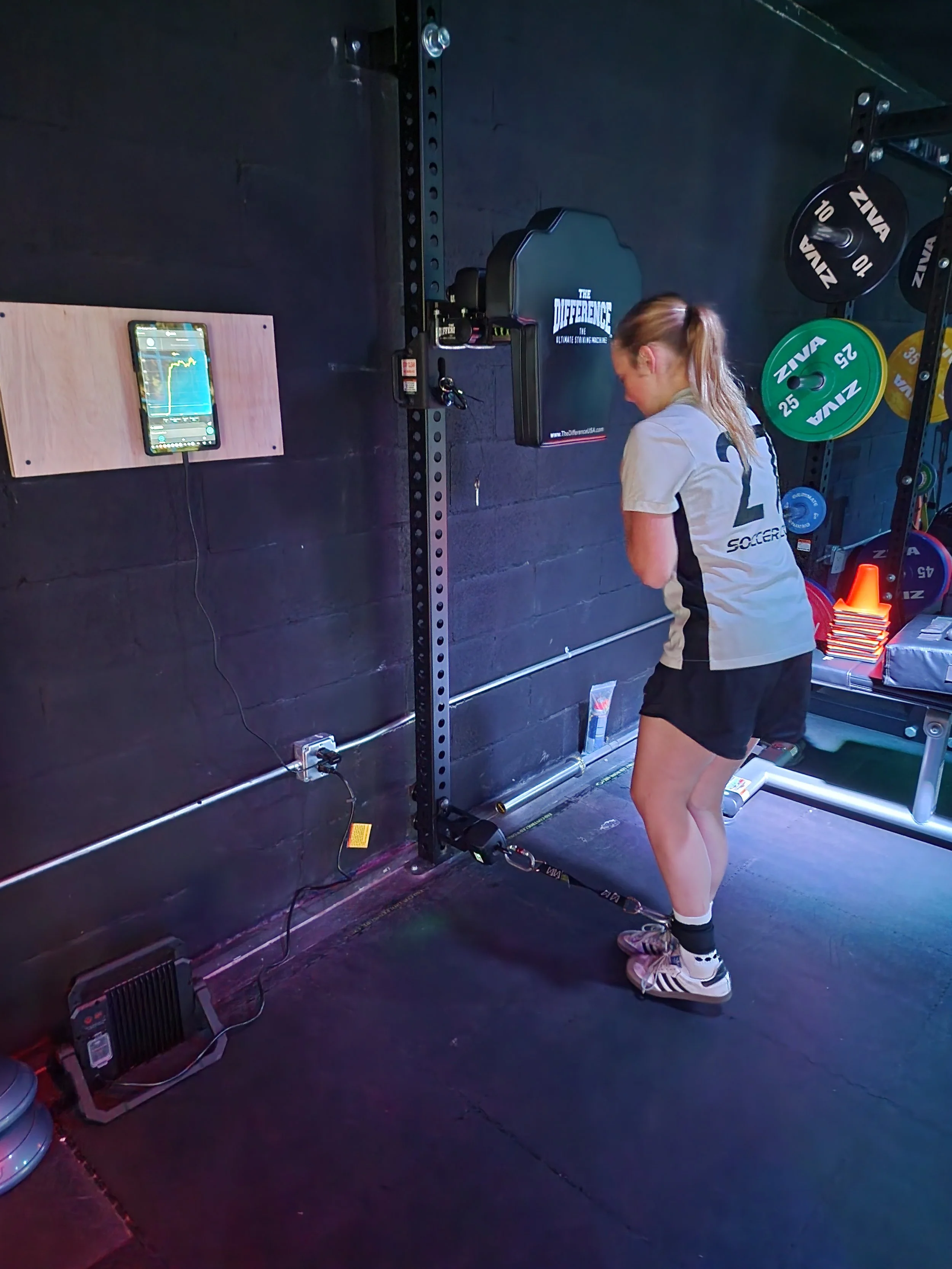
Multi-mode strength testing and training - eccentric and concentric load control, force-velocity profiling, isokinetic and variable-load training, AI-adjusted resistance for pain-free progression. The same equipment category is used by university athletic departments and professional clubs.
FORCE PLATE TESTING
Strength, Power, and Asymmetry
Jump testing, landing mechanics, single-leg vs bilateral output, and asymmetry detection. The same category of equipment used in NCAA Division I athletic departments and professional sports science programs. The data anchors the Athlete Blueprint — every assessment session, every benchmark comparison, every progress check.
02. DIMENSION TECHNICAL
Technical Improvement
Sport-specific skills assessment alongside game and training video analysis. We map technical strengths against the actual demands of the athlete's position, identify where execution breaks down — under fatigue, under pressure, in transition — and design targeted work to close the gap. Technical work is not just about repeating drills until they're cleaner. It's drills designed around what the data and the video together reveal needs to change.
03. DIMENSION: COGNITIVE
Three Gaps
Game Intelligence
Decision-making is where most performance gaps actually live — and the first thing we do is identify which gap is showing up. Each one needs a different approach.
Perception
"I didn't see it."
The opportunity was there, but the athlete didn't process it in time. Perception lagged behind the play.
Execution
"I couldn't do it."
They saw it, knew what to do, but couldn't deliver under pressure. The skill broke down when it mattered.
Confidence
"I hesitated."
They saw it, could do it — but something made them pause. Doubt crept in. The moment passed.
Three different gaps. Three different approaches. Knowing which one we're working on is what changes everything that follows.
THE ATHLETE BLUEPRINT
A complete picture of where your athlete is. A clear view of where they're going.
Each assessment lives alongside the previous ones, building the longitudinal story of how the athlete is developing - and where the next phase of work needs to focus. The Blueprint isn't only a one-time report. It's the foundation everything else is built on.
WHO WE WORK WITH
This work fits a specific kind of athlete. Here's who we work with:
✓Athletes ages 11 and up
✓ Soccer is our primary sport — framework adaptable to other field sports.
✓ Developmental, pre-elite, and college-track levels
✓ In-person sessions
COMMON QUESTIONS
-
A: Two services.
Standalone Testing is a single comprehensive assessment session at our facility -covering speed, agility, fitness, technical skills, GPS movement tracking, video analysis, and decision-making under pressure. You leave with a complete picture of where your athlete is right now, with no further commitment.
Training is the ongoing program — the same testing is built in from the start, then repeated at defined intervals (typically every 4 weeks) so progress is visible across the full season. Most families start with Standalone Testing to see where things stand, then move into Training once they have the baseline.
-
A: This is shaped by the program agreed at the first consultation. Most athletes train with us weekly, with full assessments repeating at defined intervals — typically every 4 weeks.
-
A: The first session produces a baseline. Meaningful trends appear after six to eight weeks of consistent data. Real development builds over months and compounds over years.
-
A: Most programs work on what's visible from outside — how an athlete moves, how fast they run, how strong they are. We measure all of that, plus what most programs don't: how athletes process and decide under pressure. That's where most performance gaps actually live, and that's where most training stops short.
-
A: That's exactly what the first conversation is for. They don't need clarity before they arrive — they need honesty. The direction emerges from the conversation.